 01
01Design Review
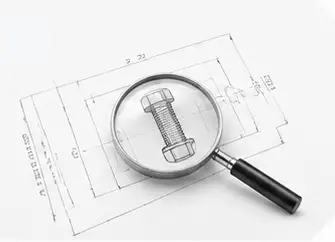
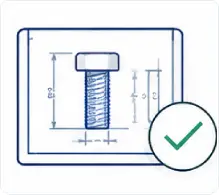
Review customer drawings before production.

A drawing defines the part. It does not always define the best way to manufacture it.
Eversteel reviews custom fastener designs from a manufacturing perspective before production begins.
By evaluating geometry, material, tolerances, production volume, tooling requirements, and secondary operations, we help identify manufacturing risks and opportunities before they become production problems.
Conceptual engineering visual. Drawing dimensions are illustrative; project requirements are confirmed from customer documentation.
Eversteel Global provides practical engineering review for custom fasteners, cold formed components, and industrial fastening applications.
01Review customer drawings before production.
 02
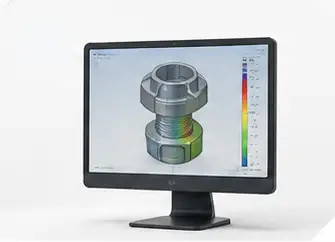
02Evaluate whether cold forming is technically achievable.
 03
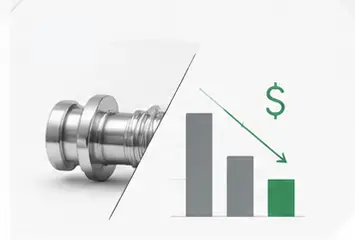
03Reduce unnecessary machining, material waste and production cost.
 04
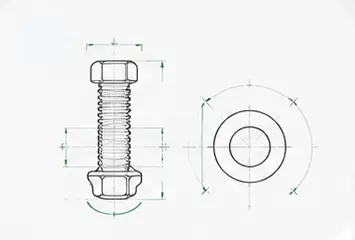
04Improve geometry for stable mass production.
A component can be technically correct on a drawing and still be difficult, unstable, or unnecessarily expensive to manufacture.
Our engineering review focuses on the relationship between part function and production feasibility.
Read the custom fastener DFM guideWhere opportunities are identified, Eversteel can propose manufacturing-oriented design considerations for customer evaluation.
The customer retains final approval of all design changes.
Cold forming can provide significant advantages in material utilization, production efficiency, mechanical performance, and repeatability - when the part geometry and production process are designed appropriately.
Eversteel evaluates whether a component is suitable for cold forming and what manufacturing considerations may affect production.
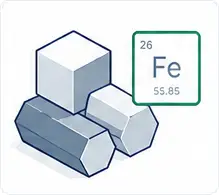
Understanding how material must move during forming to achieve the required geometry.
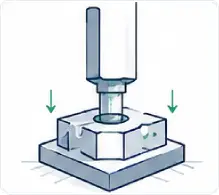
Evaluating how the component can be progressively formed while controlling stress and dimensional stability.
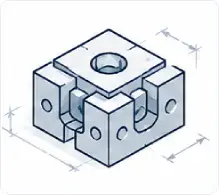
Considering whether the required geometry can be produced reliably and economically with practical tooling.
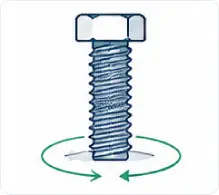
Identifying machining, trimming, threading, heat treatment, coating, or other processes required after forming.
Evaluating the relationship between tooling investment, annual volume, cycle efficiency, and unit cost.
For engineered components, quotation should not begin with unit price alone.
Before preparing a production quotation, Eversteel can review:
This approach helps establish a realistic manufacturing concept before commercial decisions are made.

Customer provides the drawing, application requirements, expected annual volume, material requirements, and relevant specifications.

Geometry, tolerances, material, tooling, forming sequence, and secondary operations are reviewed.

Where manufacturing risks or optimization opportunities are identified, they are discussed with the customer.

Any proposed changes affecting geometry or specification are reviewed and approved by the customer before implementation.

Once the manufacturing concept is established, tooling requirements and production economics can be evaluated accurately.

Samples are produced and evaluated according to the agreed drawing and project requirements.
Following approval, the component proceeds to controlled serial production and supply.
Our engineering team evaluates every feature - including head geometry, undercuts, tolerances, material flow and tooling feasibility - to maximize production stability while minimizing manufacturing cost.
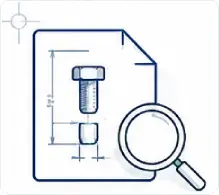
Technical support aligned with production reality and long-term component performance.
Technical support aligned with production reality and long-term component performance.
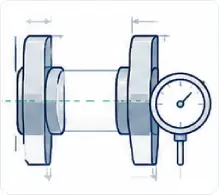
Technical support aligned with production reality and long-term component performance.
Technical support aligned with production reality and long-term component performance.
Technical support aligned with production reality and long-term component performance.
Technical support aligned with production reality and long-term component performance.

Technical support aligned with production reality and long-term component performance.
Technical support aligned with production reality and long-term component performance.
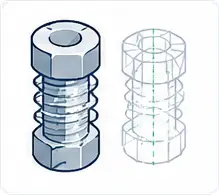
Technical support aligned with production reality and long-term component performance.
Technical support aligned with production reality and long-term component performance.

Technical support aligned with production reality and long-term component performance.
Technical support aligned with production reality and long-term component performance.
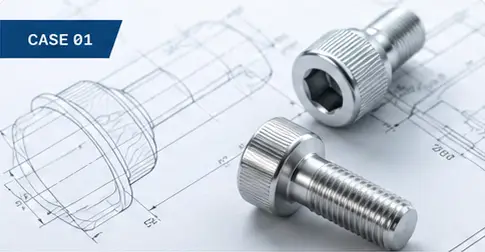
A special T-bolt geometry met the functional requirements of the application but was not suitable for economical cold forming in its original configuration.
The head geometry and functional mating requirements were reviewed to determine whether selected dimensions could be modified without affecting the customer's application.
Alternative geometry was proposed for customer evaluation, with the objective of improving manufacturability.
A production concept could be evaluated based on both functional requirements and realistic manufacturing constraints.
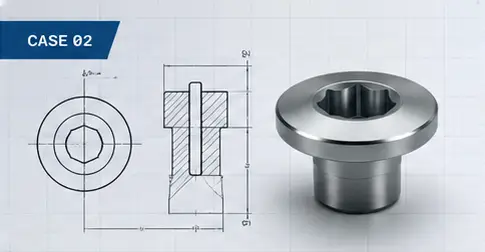
A component required costly secondary machining to achieve its specified geometry.
The part was reviewed to determine whether more of the geometry could be created during the forming process.
Reduce unnecessary secondary operations while maintaining the required function and critical dimensions.
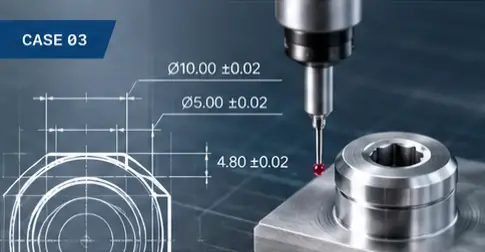
Tight tolerances across multiple dimensions increased manufacturing complexity.
Function-critical dimensions were separated from dimensions with potential manufacturing flexibility.
Maintain application performance while improving process stability and production yield.
Eversteel combines customer-facing engineering review with practical manufacturing knowledge.
Our approach considers not only whether a component can be designed, but whether it can be tooled, formed, processed, inspected, and produced consistently at the required volume.
This connection between engineering and manufacturing is central to how Eversteel approaches custom fastener projects.
Direct answers for engineers and procurement teams evaluating a custom manufacturing project.
Yes. We can review geometry, tolerances, material direction, and manufacturability before tooling begins.
Yes. DFM support is a central part of the engineering process for custom cold formed and industrial fastener projects.
The review can include geometry, material, tolerance, forming direction, material flow, undercuts, head geometry, tooling access, secondary operations, production risk, and cost drivers.
No. DFM identifies feasible features, risks, and possible changes. Some requirements may still need secondary machining or a different manufacturing route.
Whether you are developing a new component, evaluating an alternative supplier, or reviewing the cost of an existing part, start with the drawing.
Send us your technical requirements and expected annual volume. We will evaluate the project from a manufacturing perspective before moving to quotation.